Survey: Have your say on the future of Electoral Area C
The SLRD is reviewing the Electoral Area C Official Community Plan (OCP), which helps guide future land use and development. Share what you value about Area C and what’s important for its future by completing the survey.
Complete the survey for a chance to win a $50 gift card to an Electoral Area C business of your choice. See the survey for details.
The survey takes about 10–15 minutes to complete and closes Monday, November 2, 2026.
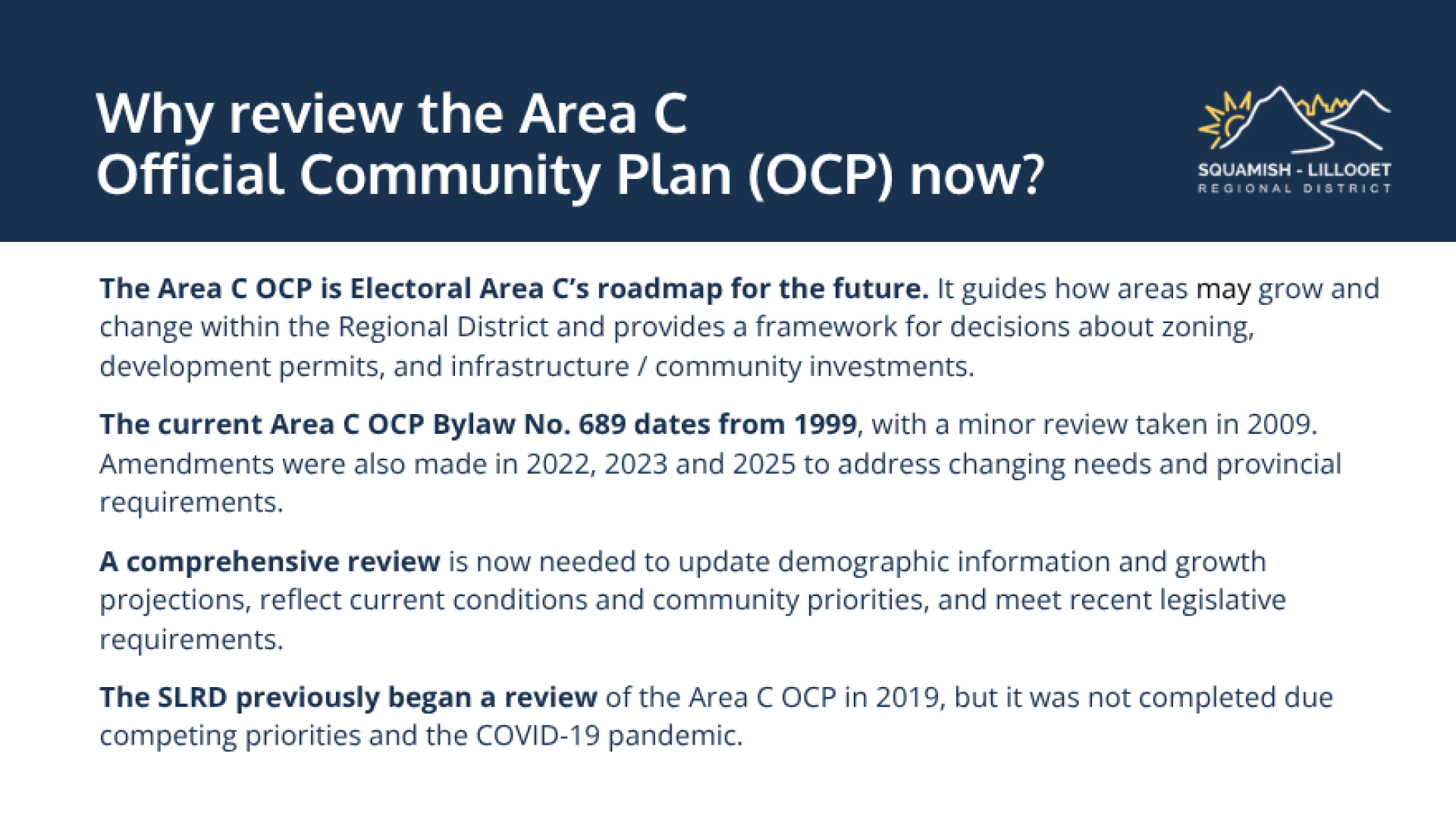
The Area C Official Community Plan is a long-range policy document that guides land use, growth, services, environmental stewardship, housing, transportation, agriculture, community resilience and climate action in Electoral Area C of the Squamish-Lillooet Regional District (SLRD). It underwent a minor review in 2008 (adopted in 2009), but the bylaw itself is dated 1999.
The SLRD is undertaking a comprehensive review of the Electoral Area C OCP in 2026 and 2027.
What is an Official Community Plan?
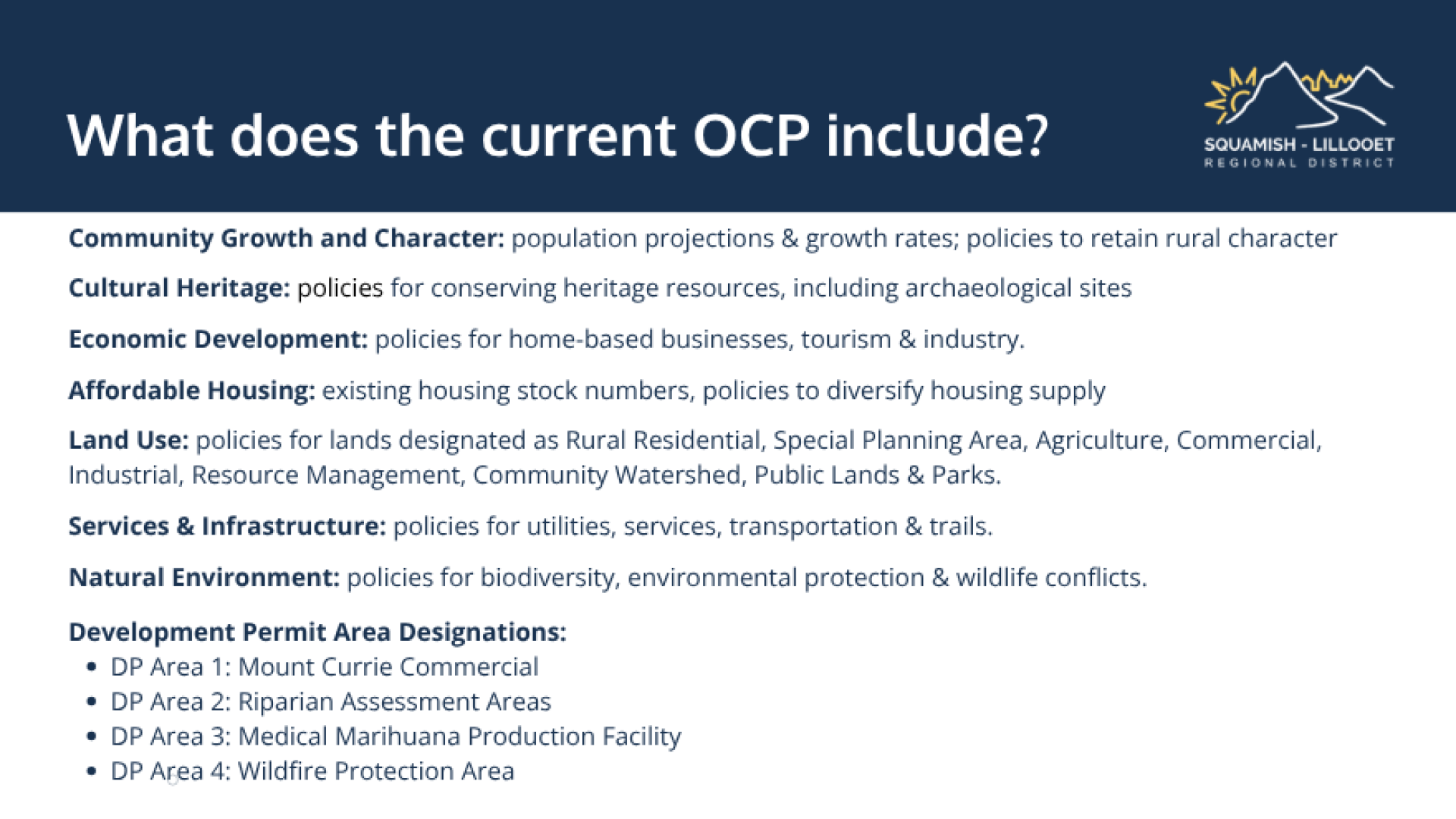
An Official Community Plan, or OCP, sets out a community’s long-term vision and provides a framework for future land use decisions. It includes objectives and policies for topics such as residential, commercial, industrial, agricultural, park, resource management, and community watershed protection lands, as well as matters such as housing, transportation, natural hazards, climate change, infrastructure, and development permit areas.
Project topics
Image
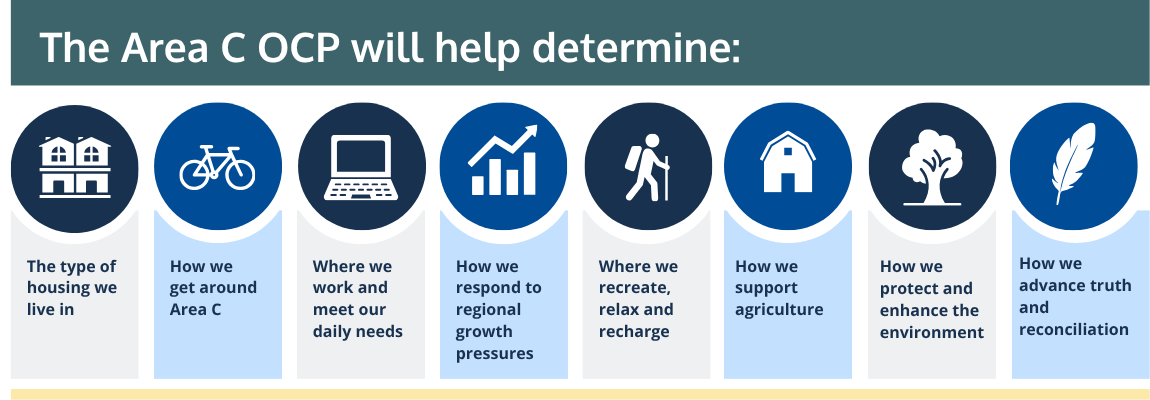
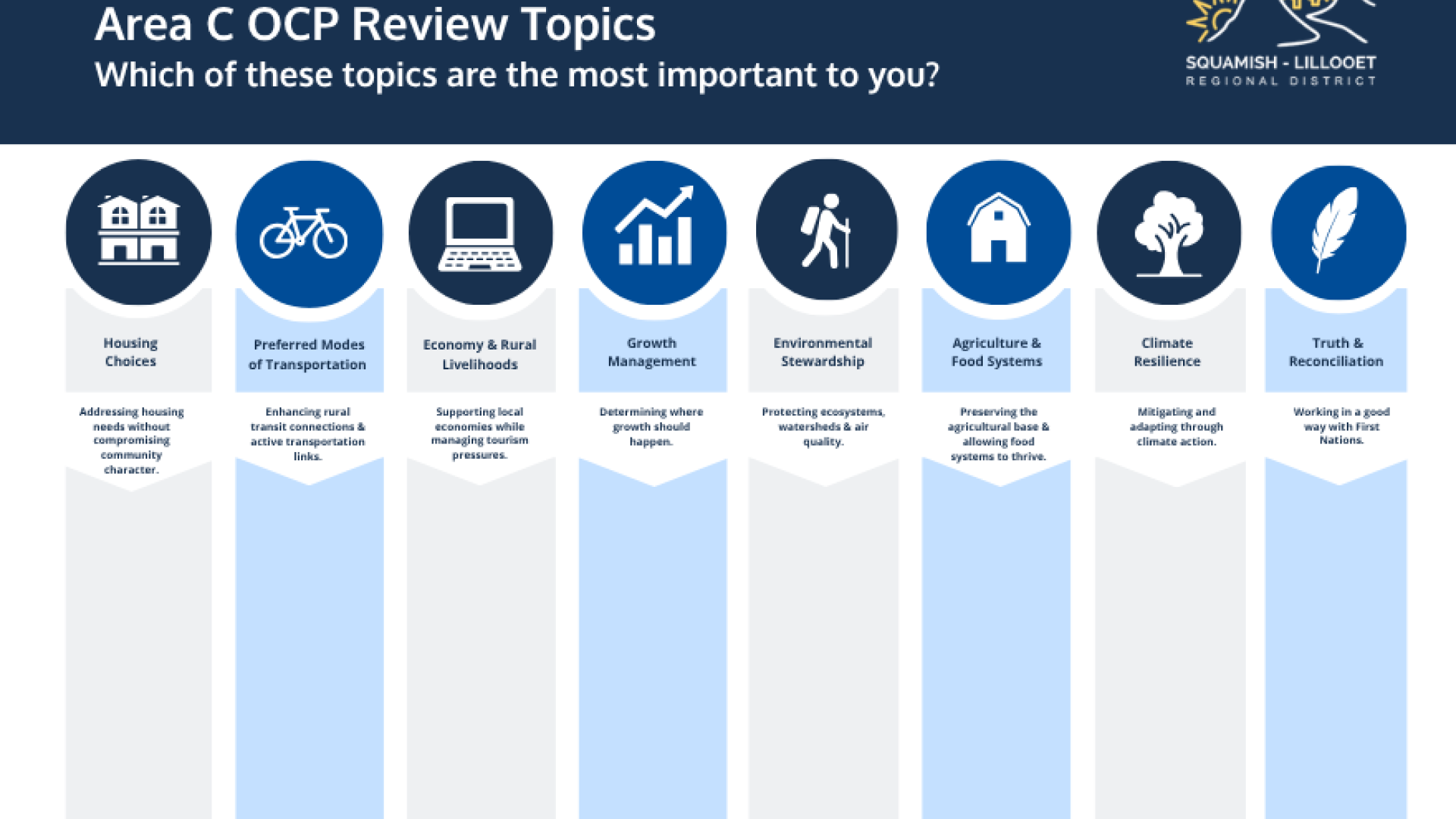
The OCP Review will consider updates related to housing choice, rural settlement patterns, agriculture, economic development, transportation, parks and trails, community services, climate change, natural hazards, wildfire protection, environmental protection, reconciliation, and alignment with other SLRD bylaws and regional policies.
Why the OCP Review matters
The Area C OCP Review is an opportunity for residents, property owners, First Nations, community organizations, businesses, and partner agencies to help shape policies that reflect current needs and future priorities.
The Review will help us:
Plan for growth: Ensure we accommodate growth projections and housing needs over the next 20 years.
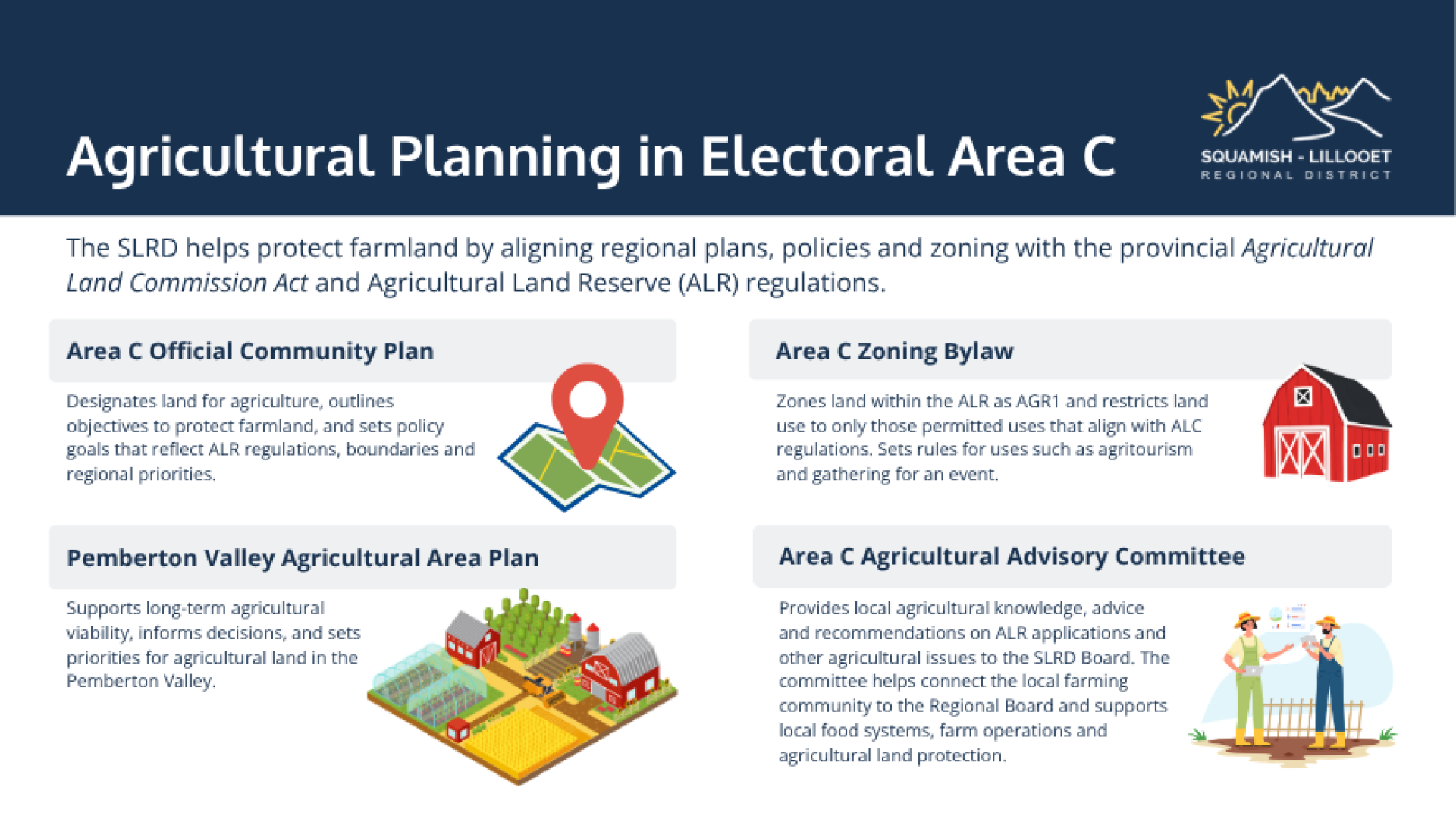
Support agriculture and rural livelihoods: Maintain productive agricultural lands, local food systems, home-based businesses, tourism, and resource-based activities.
Strengthen resilience: Update policies related to wildfire, flooding, steep slopes, geohazards, climate change, and emergency preparedness.
Protect natural systems: Develop policies for riparian areas, watersheds, wildlife habitat, parks, trails, and environmental stewardship.
Reflect community values: Reflect the priorities of people who live, work, farm, recreate, and invest in Electoral Area C.
Advance reconciliation: Demonstrate the SLRD’s commitment to Truth and Reconciliation by effectively engaging First Nations, and co-developing objectives and policies that support their interests.
Consultation events
Learn more about the review and how you can get involved. Watch this space for upcoming events.
Completed events
Area C Official Community Plan Review Open House Pemberton & District Community Centre, 7390 Cottonwood Street Monday, September 28, 2026
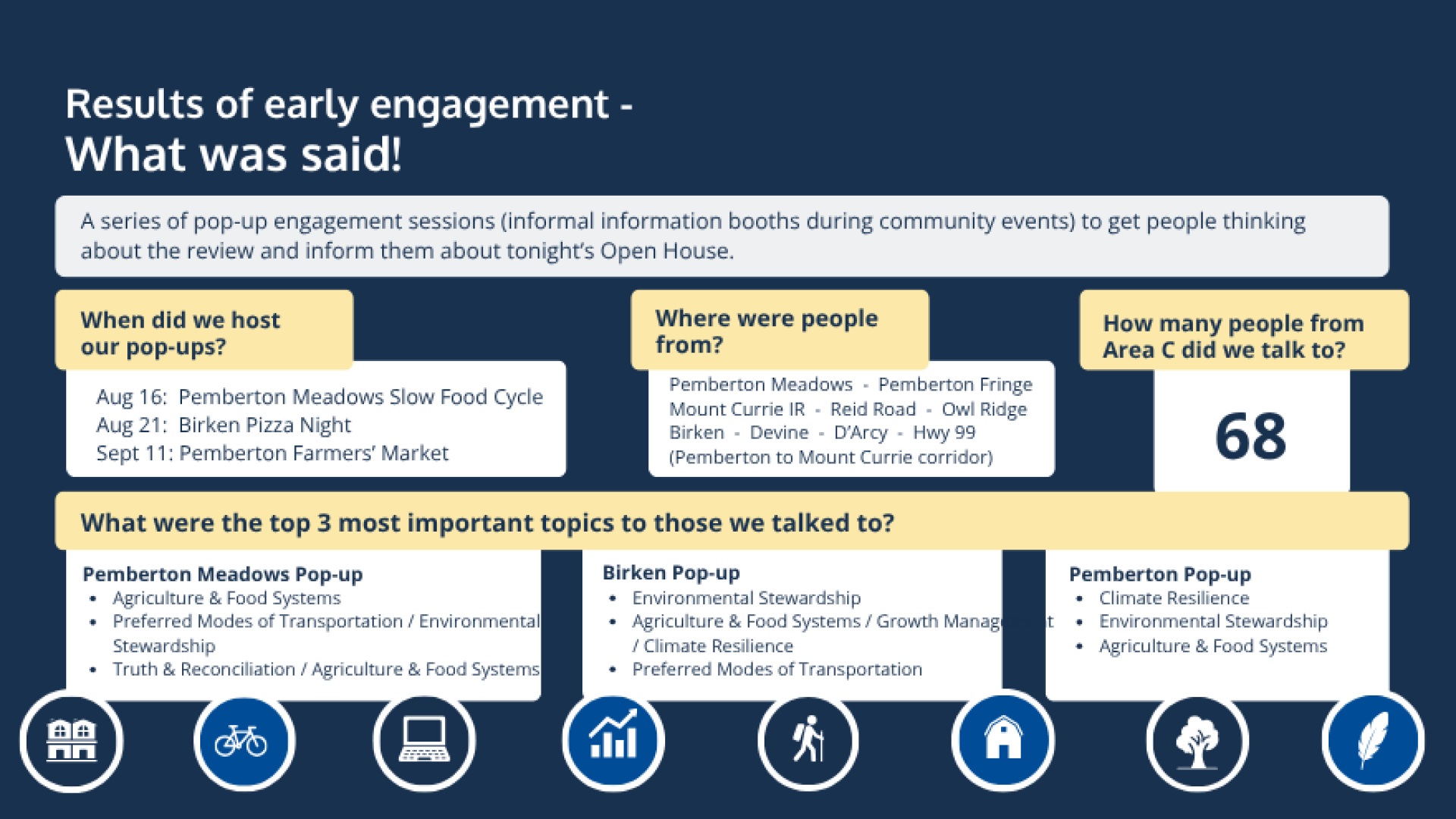
Pemberton Meadows pop-up during Slow Food Cycle Helmer's Organic Farm, 8358 Pemberton Meadows Road Sunday, August 16
Birken House Bakery pop-up during Community Pizza Night Birken House Bakery, 9320 Portage Road Saturday, August 22
Pemberton Farmer’s Market pop-up Downtown Community Barn, 7444 Frontier Street, Pemberton Friday, September 11, 2026
What was shared
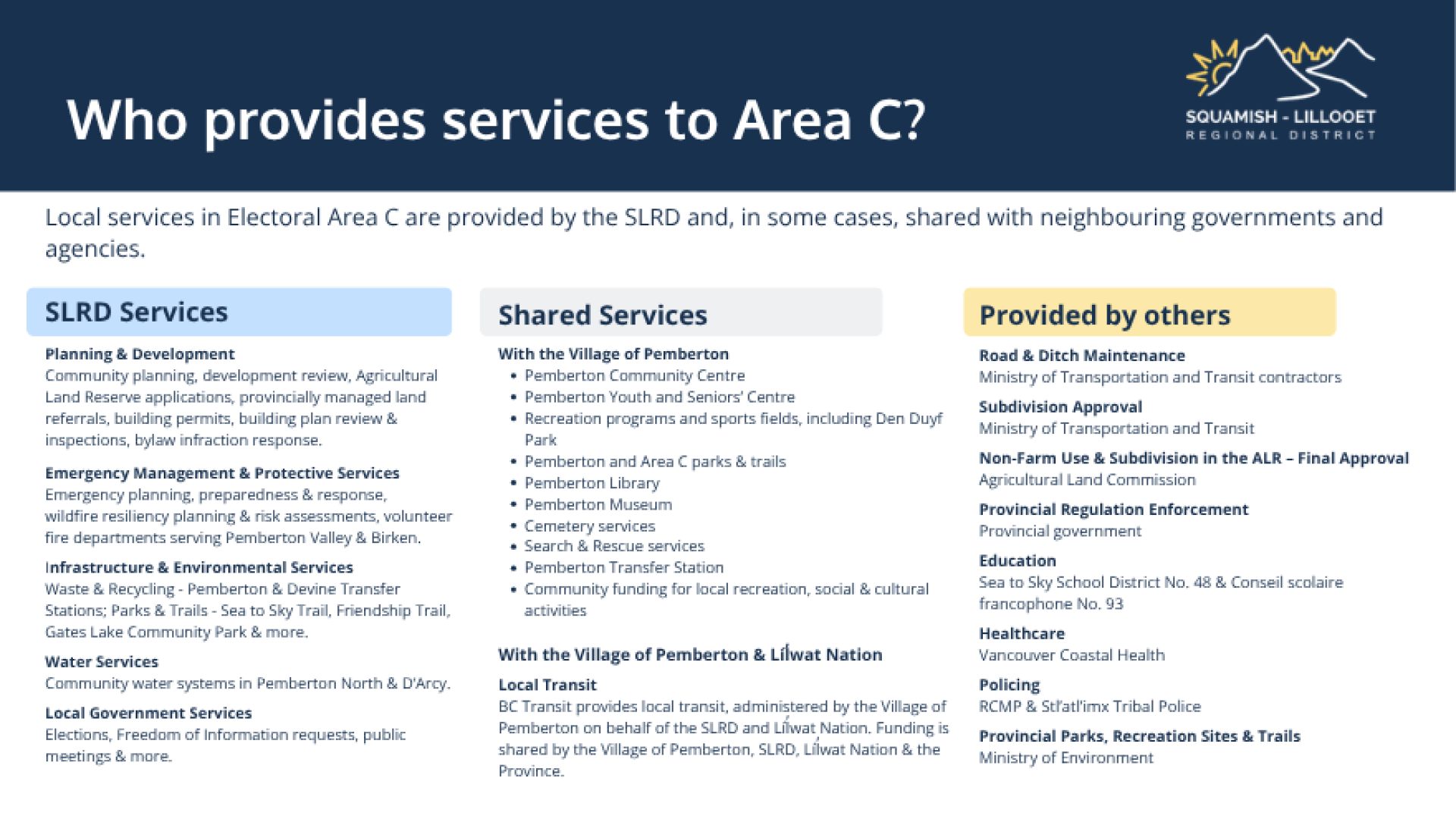
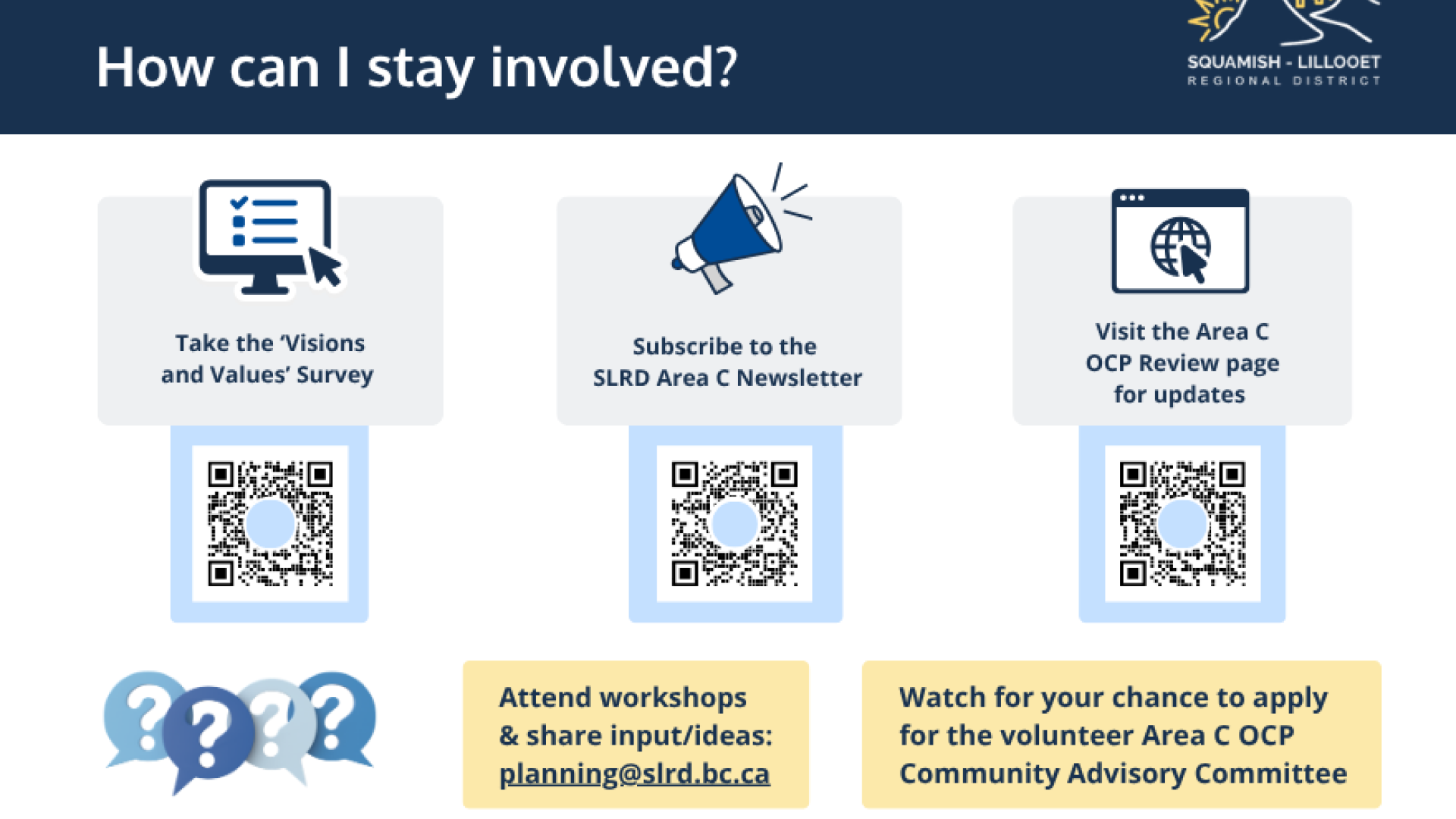
Thank you to everyone who joined us at the recent Electoral Area C Official Community Plan (OCP) Open House. View the slides below for an overview of the information shared and topics explored at the event.
Frequently Asked Questions
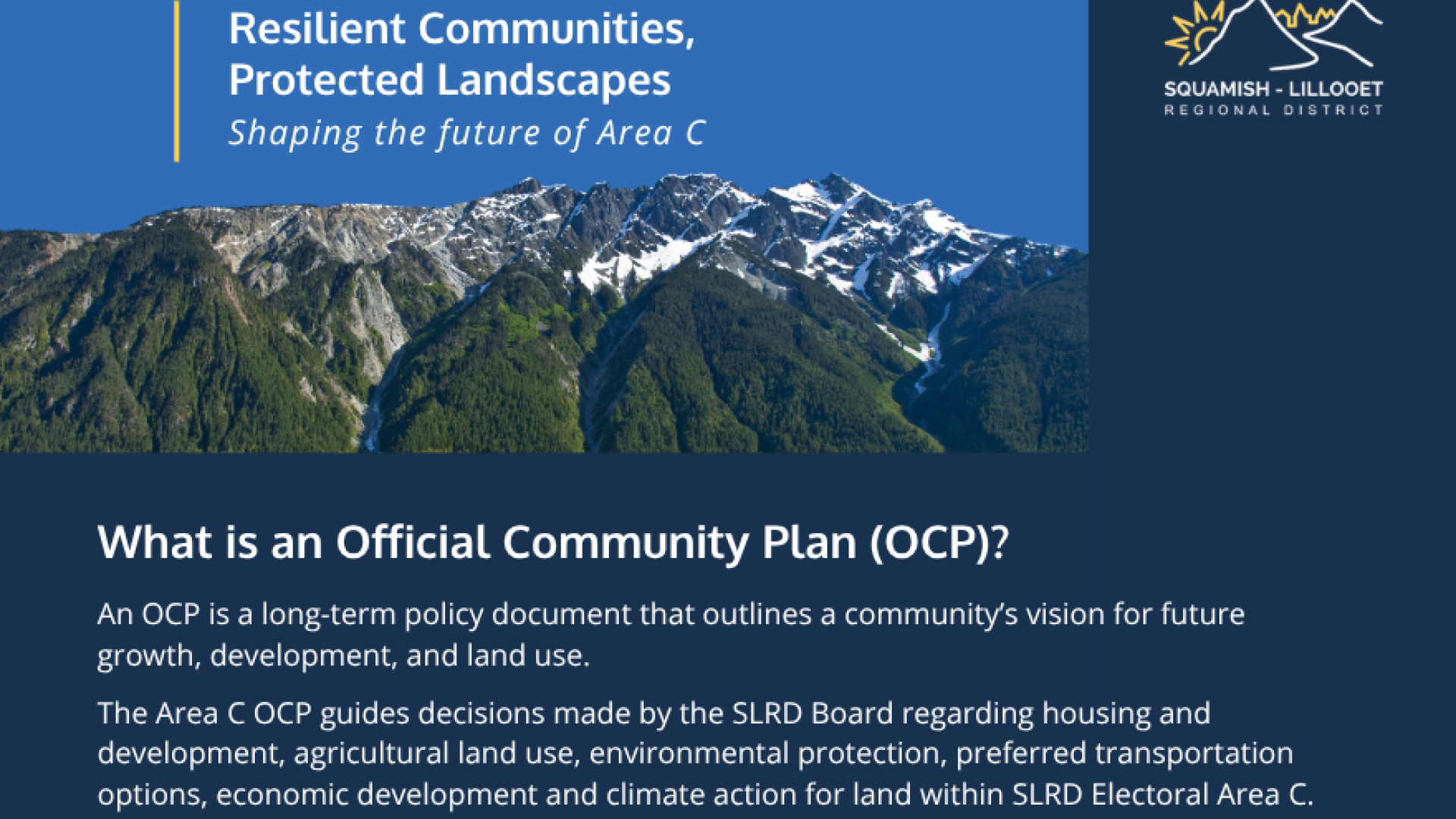
An Official Community Plan (OCP) is a long-term policy document that outlines a community’s vision for future growth, development, and land use. The Area C OCP guides decisions made by the SLRD Board regarding housing and development, agricultural land use, environmental protection, and economic development for all lands within SLRD Electoral Area C.
An OCP impacts residents and property owners directly – it influences where additional housing is built, how agricultural land and natural areas are protected, how we get around, and how regional services like waste management and fire protection are delivered in your community.
The SLRD is meant to update OCP’s regularly to meet evolving housing targets and population needs, ideally every 5 to 10 years. The last review was in 2009; we are now overdue!
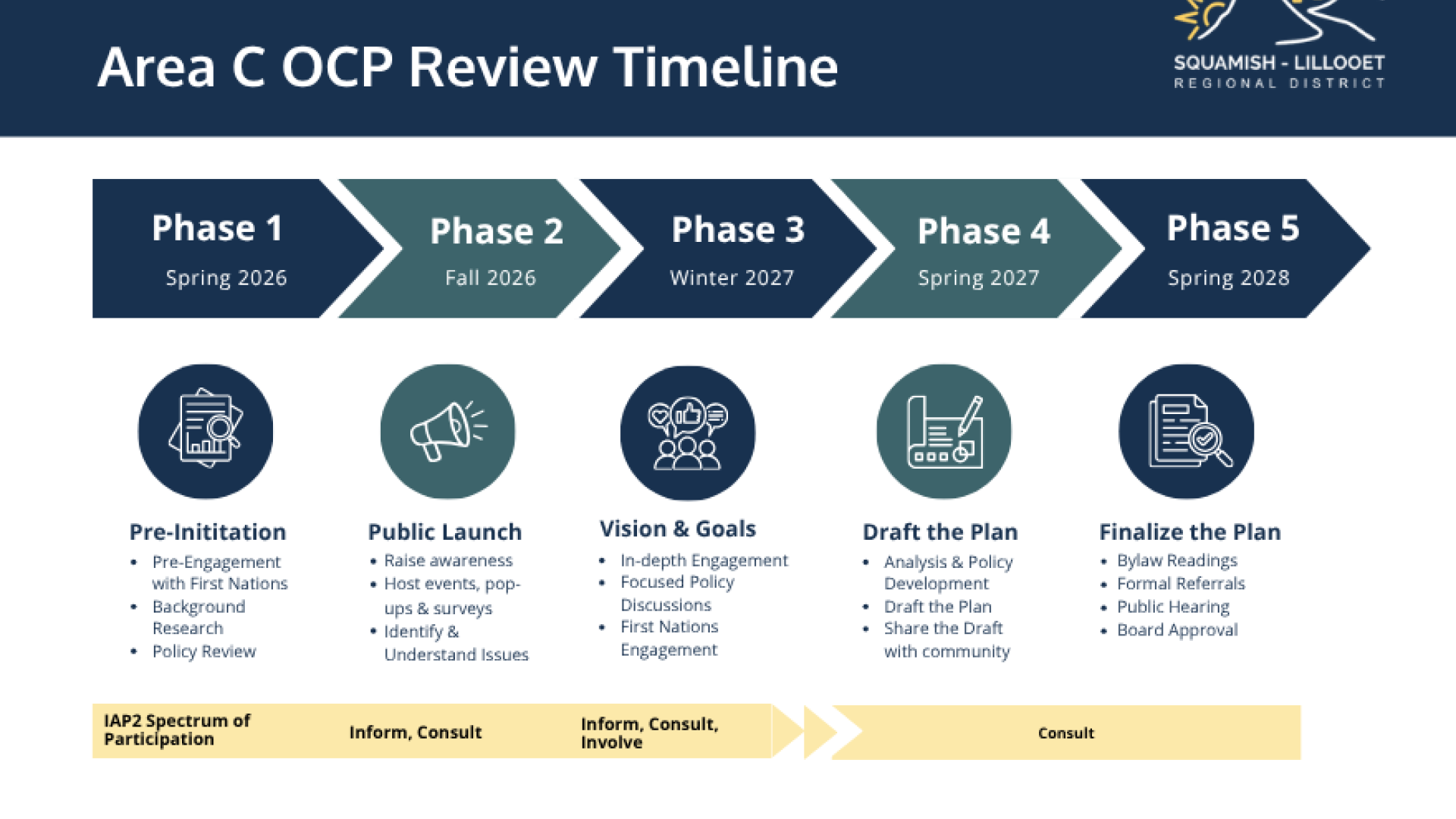
A typical comprehensive review of an OCP generally takes 12 to 24 months over multiple phases. The Area C OCP Review project will publicly launch in the fall of 2026, and the SLRD intends to finalize the OCP Bylaw in the spring of 2028.
The OCP assigns land use designations (e.g., rural residential, agricultural, commercial, industrial) to all properties. All local bylaws, zoning regulations, and public works must be consistent with these designations.
OCPs are developed collaboratively through extensive public consultation, including surveys, public information meetings, pop-ups, open houses, workshops, online feedback forms, etc. A variety of engagement opportunities will be available throughout the process and throughout the area. Information on the Review and opportunities to get involved will be posted on the Project Page of the SLRD Website. You can sign up for project email updates and submit written feedback by emailing comments or questions directly to planning@slrd.bc.ca.
Anyone with an interest in Area C is welcome (residents, rights-holders, landowners, businesses, community groups, neighbours, etc.) and encouraged to be involved!
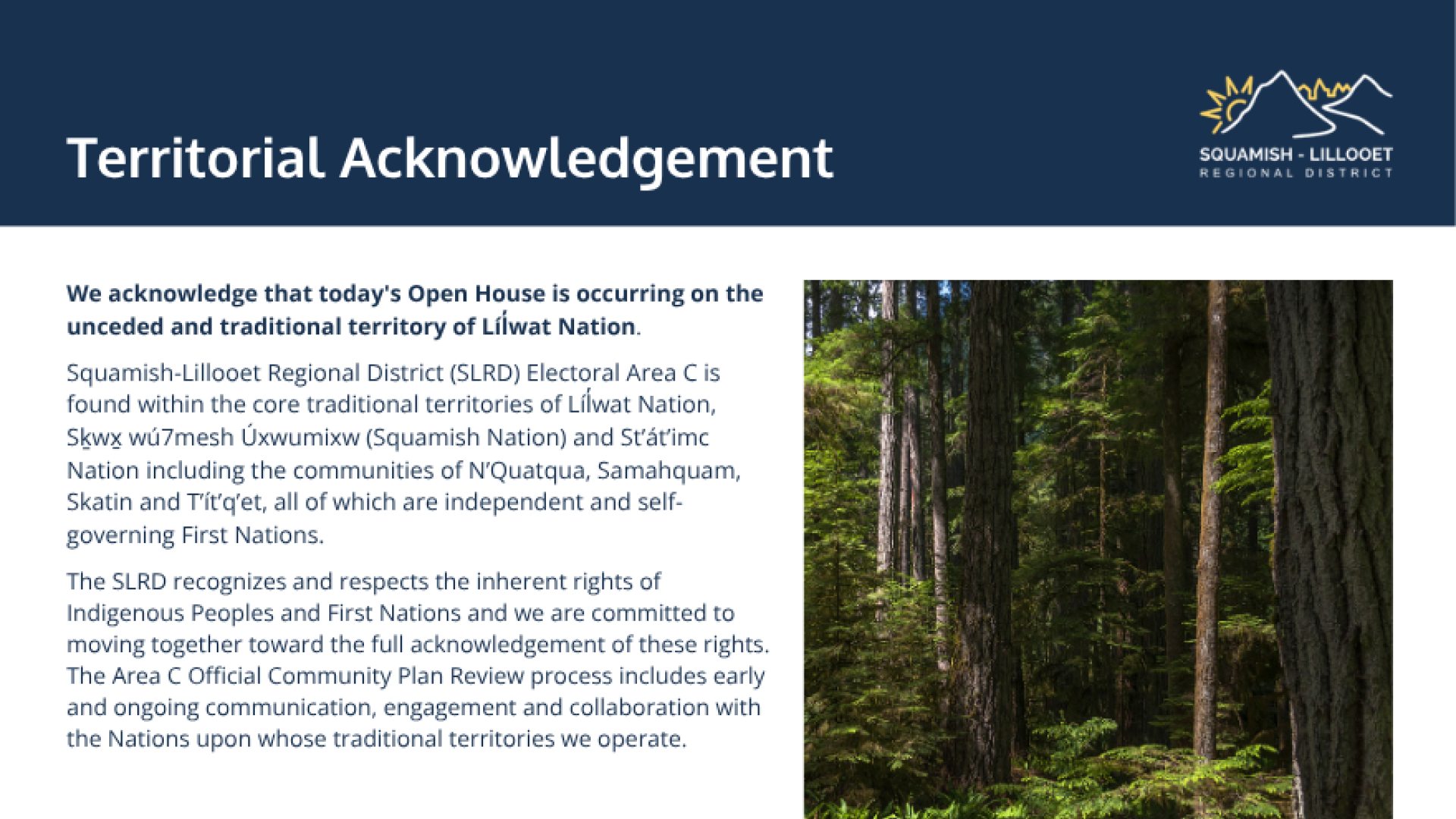
The SLRD will consult with First Nations whose Traditional Territory spans Area C, namely: Líĺwat Nation, N’Quatqua, T’ít’q’et, Samahquam, Skatin, and Sḵwx̱wú7mesh Úxwumixw (Squamish). Initially, staff will confirm preferred means of engaging and defer to First Nation timelines/preferences depending on their level of interest and capacity. Consultation or Protocol Agreements with the host nation may be required/requested before meaningful government-to-government engagement on the Review can proceed.
The following items must be covered as per the Local Government Act (LGA). They are essential for guiding the growth and development of Area C, ensuring sustainable and resilient planning:
Housing Needs
Identify & address the demand for housing over a 20-year period. Policies on affordable, rental, and special needs housing, aligned with Housing Needs Reports.
Land Use
Designation of areas for residential, commercial, industrial, institutional, agricultural, and recreational use.
Transportation
Plan for the movement of people and goods within Area C, including regional transit connections.
Infrastructure and Utilities
Location of public facilities (parks, trails) and service infrastructure (water, solid waste & resource recovery).
Mandatory targets and actions to reduce greenhouse gas (GHG) emissions. Address the impacts of climate change and planning for adaptation
Resource Management
Identification of sand and gravel deposits suitable for future extraction.
Optional Topics that reflect local values can be included, such as:
Truth and Reconciliation
Historical context of First Nations occupation and use of the land/policies related to collaboration / future stewardship of lands & resources.
Agricultural Preservation
Policies for the maintenance and enhancement of farming and agricultural land.
Community and Social Well-being
Policies relating to active transportation, recreation, social inclusion, and well-being such as age-friendly or disability-friendly planning.
Conservation and Habitat Protection
Policies relating to the preservation, protection, restoration and enhancement of the natural environment, its ecosystems and biological diversity.
Other topics deemed important by the Community!
During public engagement, issues of concern to the residents, property owners and business owners in Area C will be determined and considered for inclusion.
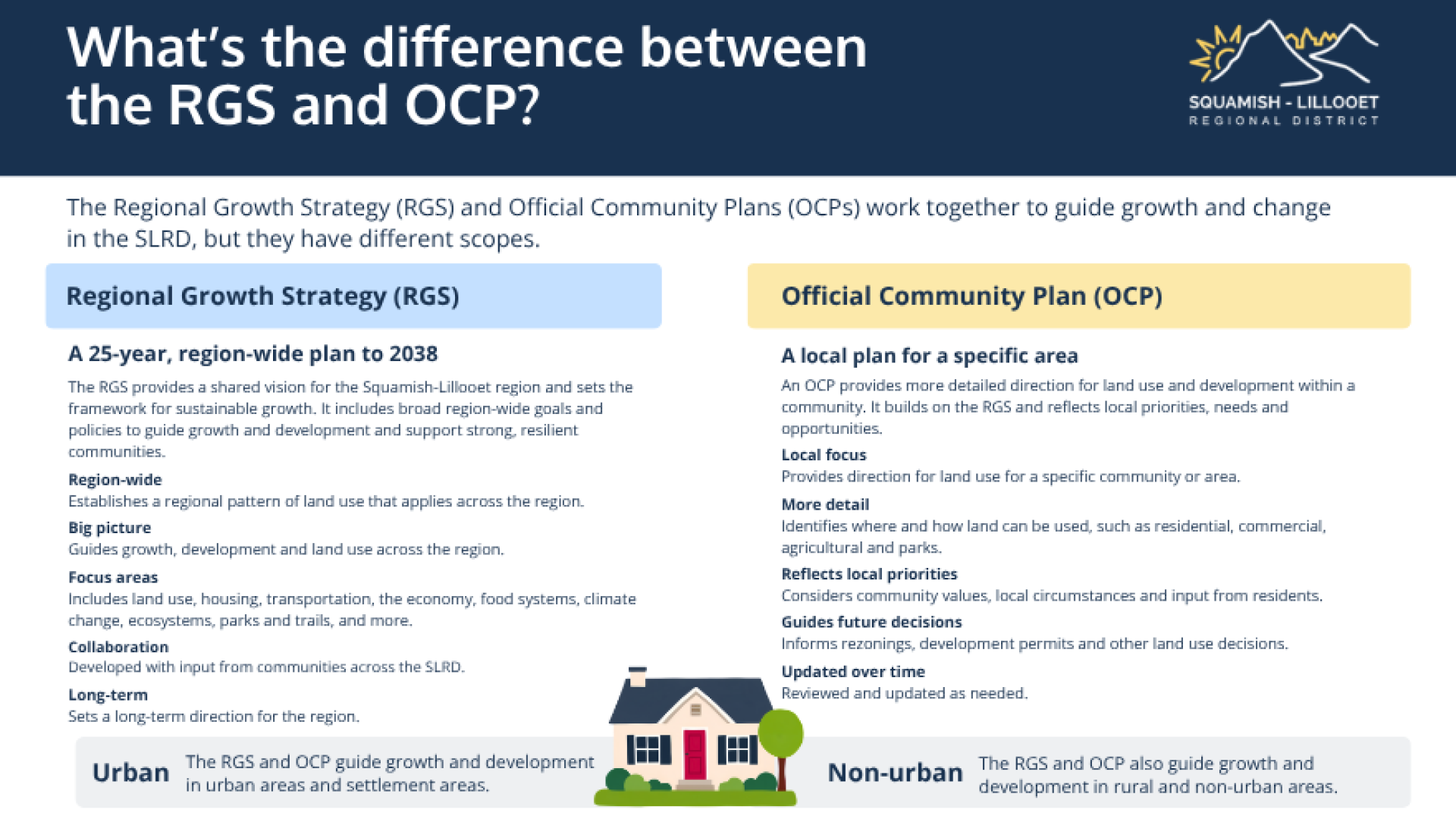
The RGS was co-created with member municipalities and the SLRD and provides a framework for guiding decisions on regional issues such as future growth and other common social, economic and environmental objectives. OCP’s play a vital role in the context of the RGS – they are a tool to successfully implement the region’s vision and goals, and they map out how a community will meet its housing, commercial, industrial, agricultural, recreational and public needs. The policies of the Area C OCP must align with the strategic directions, objectives and targets identified in the RGS.
While the OCP sets the broad goals and land-use designations, it is implemented through the regulations contained in the Area C Zoning Bylaw. All future zoning amendments must comply with the OCP.
Want to stay informed about what else is happening in your community?
Subscribe to SLRD Update for Board meeting highlights, funding announcements and regional news. You can also sign up for updates specific to your Electoral Area or topics that interest you, including Area C OCP Review public engagement opportunities, planning and development, emergency preparedness, parks and recreation, and more.
Community input is central to the OCP Review. Throughout the process, the SLRD will provide opportunities to learn about the project, ask questions, share local knowledge, and provide feedback on draft directions and policies.
Watch this webpage for project updates, engagement opportunities, meeting dates, and draft materials.
Subscribe to the SLRD newsletter (choose Area C) to receive notices about Electoral Area C OCP Review related updates.
Attend open houses, pop-ups, workshops, public meetings, or online engagement sessions when scheduled.
Share your comments, questions and local knowledge. We want to hear from you!
Future updates will include upcoming surveys, engagement opportunities, engagement summaries, draft policy directions, Board reports, public hearing information, and other opportunities to provide input.
Project Timeline
Phase 1: Pre-initiation (Spring/Summer 2026)
Completed
Pre-engagement with First Nations. Background research. Policy Review.
Phase 2: Public Launch (Summer/Fall 2026)
Current
Raise awareness. Host events & surveys. Identify & understand issues. Continued First Nations Engagement.
Phase 3: Vision & Goals (Winter 2027)
Not completed
Visioning. In-depth Engagement. Focused Policy Discussions. Continued First Nations Engagement.
Phase 4: Draft the Plan (Spring 2027)
Not completed
Analysis & Policy Development. Draft the Plan. Share the Draft with the community. Continued First Nations Engagement.
Phase 5: Finalize the Plan (Spring 2028)
Not completed
Bylaw Readings. Formal referrals. Public Hearing and Board approval.