
Wildfire Evacuation Alerts and Orders in the SLRD
Evacuation orders and alerts currently in place in the SLRD. Residents needing assistance with evacuating the area should contact the SLRD’s Emergency Operations Centre 24-hour on-call Duty Manager at: 604-384-7357.
Details regarding SLRD Evacuation Alerts and Orders are available on the SLRD website on the Emergency Operations Centre page. Evacuation Orders and Alerts are issued to protect public safety as conditions change. Residents within an Evacuation Order area should leave immediately, while those within an Evacuation Alert area should be prepared to leave at short notice.
SLRD Emergency Operations Centre (EOC) staff continue to work closely with the BC Wildfire Service (BCWS) and response partners to assess wildfire activity, coordinate response efforts, and conduct advance planning to support the safety of residents and visitors.
Thank you to residents, volunteers, partner agencies and emergency responders for your continued cooperation, patience and support as we work together to respond to these wildfire incidents. Staying informed and being prepared helps keep our communities safe.
Wildfires in the SLRD
There are multiple wildfires affecting communities in the SLRD:
BC Wildfire Service Dashboard
Wildfire support for agricultural producers
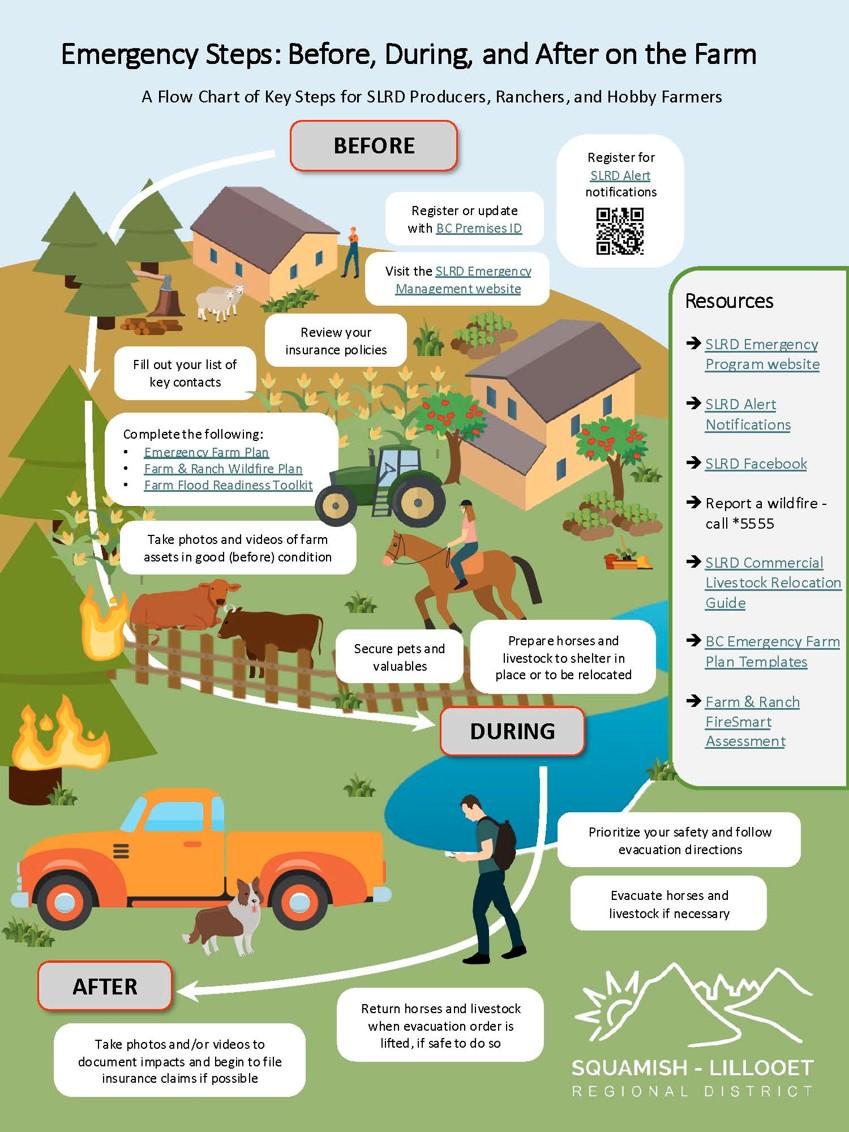
Wildfires are affecting agricultural operations in several areas of the SLRD. Farmers, ranchers and livestock owners in areas affected by Evacuation Alerts and Orders are encouraged to plan early and be prepared to act as conditions change.
If your agricultural operation is under a wildfire Evacuation Alert or Order and you need agricultural emergency assistance, contact the SLRD Emergency Agricultural Coordinator at 604-384-7329. Assistance is available 24 hours a day, seven days a week.
Agricultural emergency preparedness resources, including information about livestock evacuation, animal welfare and available supports, are available on the SLRD website: Agricultural Emergency Preparedness | Squamish-Lillooet Regional District
Wildfire smoke
Wildfire smoke continues to affect communities across the region. Take steps to protect yourself from smoke and extreme heat, especially if you are more vulnerable to health impacts.
Information, resources and guides are available on the Vancouver Coastal Health and Interior Health websites.
Heat
Environment Canada has issued a heat warning for parts of the SLRD. Risks of high temperatures during a wildfire include heat-related illnesses and respiratory issues, particularly with certain age groups and people with chronic conditions. Monitor symptoms, pay attention to signs of heat-related illnesses and seek medical assistance if symptoms worsen. Stay cool, use air conditioning and stay indoors when cooler temperatures are available.
Water conservation
The SLRD is asking residents throughout the region – especially in areas where Evacuation Alerts and Orders in effect – to conserve water and avoid unnecessary sprinkler use. Conserving water helps support community needs and ensures resources remain available for emergency response if required. Thank you for protecting critical water supplies while BC Wildfire Service crews continue their work throughout the region.
Be prepared and stay informed
We remind all residents, regardless of where you live in the regional district, to prepare:
- Develop an emergency plan.
- Create an emergency kit and grab-and-go bags for everyone in your household.
- Practice your plan.
- Stay informed through official sources:
- Follow the SLRD website for evacuation alerts and orders: SLRD.bc.ca/eoc
- Sign up for the SLRD.bc.ca/alert to receive emergency alerts by email, text or voicemail.
- Download the BC Wildfire Service app (Apple or Google), or visit their website dashboard, for the latest fire information.
- Follow DriveBC for road impacts: Drivebc.ca