
This is Community Update #16 for the Place Glacier Outburst Flood Hazard located near the Gates Lake and Poole Creek communities in Electoral Area C.
The Evacuation Alert issued on June 7, 2026 remains in effect due to the risk for overland flooding and debris flooding caused by the potential outburst of the ice-marginal lake in Place Glacier. The SLRD continues to monitor conditions closely and is working with technical experts and emergency response partners.
Emergency Embankment Repairs
On June 11, SLRD contractors completed repairs to the Place Creek water channel embankment that was damaged in the outburst that occurred last year. Contractors will remain in the area over the coming days to close out the work site.
This channel repair work is intended to restore risk levels to residences at valley bottom to what they were prior to the 2024 outburst event by maintaining Place Creek’s historical flow toward Poole Creek. The repairs are not intended to create a new watercourse or transfer flood risk from one area to another. This emergency work also does not eliminate the possibility that an outburst of strong enough magnitude will cause a realignment of flow towards Gates Lake.
Place Glacier Hazard Monitoring
Data gathered from monitoring equipment installed in the lake and extent of the lake from satellite imagery indicates that the lake's volume is comparable to last year (2025) when the lake drained. This does not imply that that an outburst is imminent, however. In the days ahead, an Evacuation Order may be issued following discussion with technical experts and emergency response partners.
The SLRD Emergency Operations Centre is working in close partnership with scientists at the University of Northern British Columbia and Natural Resources Canada to provide as much advance notice to community members as possible.
Residents are encouraged to sign up for the SLRD Alert to receive emergency notifications directly by phone, text message, or email.
Public Safety
Residents and members of the public are reminded that hazardous conditions may exist in and around Place Creek, Poole Creek, Gates Lake, and other nearby water channels.
Increased water flows, sediment transport, erosion, unstable streambanks, and debris may occur before, during, and following an outburst event. Members of the public should avoid hiking in the backcountry near Place Creek and below or around Place Glacier and are urged to stay away from all water channels, streambanks, culverts, and low-lying areas until further notice.
Community Preparedness
A free 24/7 self-serve sandbagging station can be accessed at Gates Lake Community Park on Pemberton Portage Road for residents of the Gates Lake and Poole Creek communities.
Sand and empty sandbags are available on site. Residents are asked to bring their own shovel and gloves and to take only the number of sandbags reasonably required to help protect their property.
Additional information about flood preparedness, making an “emergency ready plan”, and effective sandbagging is available through PreparedBC.
Emergency Support Services (ESS)
With an Evacuation Alert currently in effect, now is the time for residents to prepare for the possibility of an evacuation. The SLRD Emergency Support Services team is coordinating with the Canadian Red Cross to prepare for a potential Evacuation Order should conditions change.
Residents are encouraged to pre-register for ESS before an emergency occurs. Pre-registration helps ensure that support can be provided more quickly if an evacuation becomes necessary.
If an Evacuation Order is issued, ESS may be able to provide temporary supports such as accommodation, food, clothing, and other essential services for eligible evacuees.
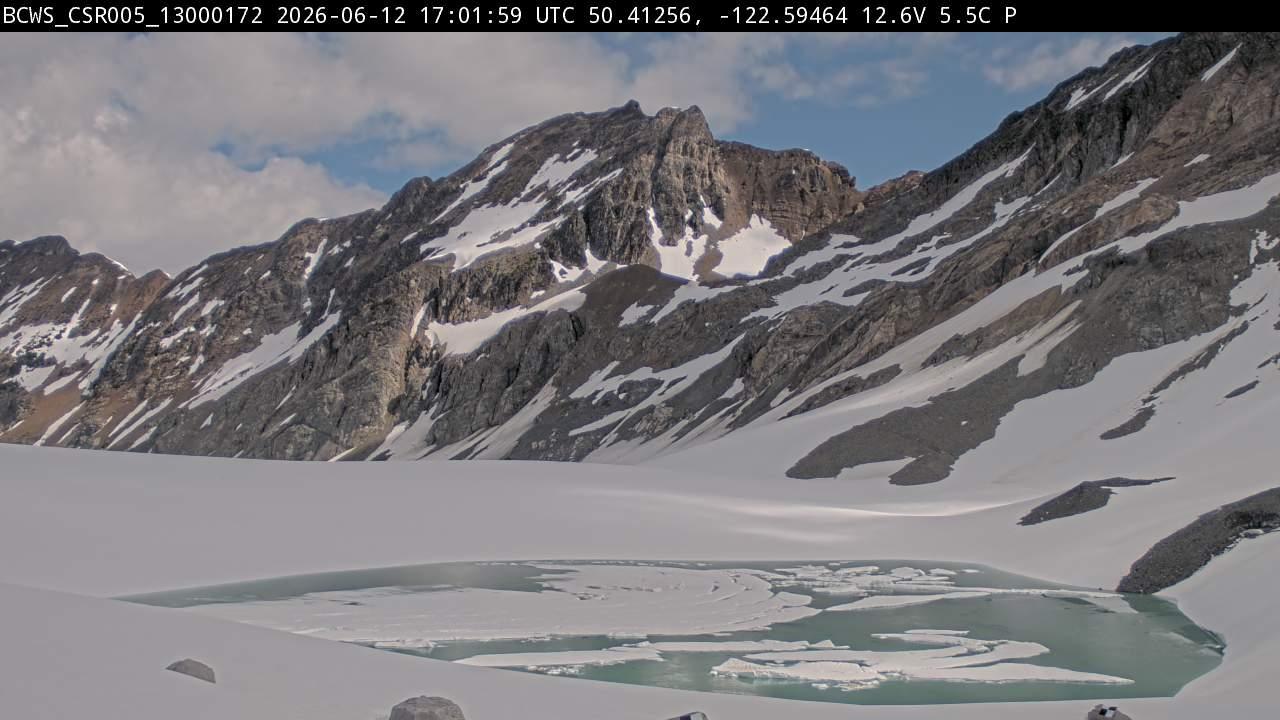
Place Glacier monitoring camera showing current lake conditions at 10 a.m. on June 12, 2026.
NOW IS THE TIME TO PREPARE FOR AN EVACUATION
- Pre-register for Emergency Support Services online at: https://ess.gov.bc.ca/
- Locate all family members and designate a meeting area outside of the evacuation area, should an Evacuation Order be called while separated.
- Pack essential items such as government-issued ID, medications, eyeglasses, valuable papers (e.g., insurance, credit, and mortgage information), immediate care needs for dependents and, if time and space permits, keepsakes for quick departure.
- Prepare to move people who may need additional time to evacuate, children and/or neighbours who would require assistance.
- If transportation assistance is needed, call the SLRD Emergency Operations Centre (EOC) at 604-384-7357.
- Prepare to take pets with you and move livestock to a safe area (if possible).
- Arrange transportation and accommodations for all your household members, if possible, and fill the gas tanks of personal vehicles.
- Wait for an Evacuation Order to be issued before evacuating. Further information will be posted in notices at www.slrd.bc.ca/eoc and through the SLRD Alert Messaging service.
- Subscribe to SLRD Alert for free at www.slrd.bc.ca/slrdalert to receive emergency notifications via email, text messages, and voicemail.
Stay safe
- Avoid hazard zones – stay clear of steep gullies, alluvial fans, and historical/modelled debris flow paths.
- Stay alert during intense rainfall – debris flows often occur during or shortly after heavy storms.
- Listen to warnings – pay attention to local alerts from the SLRD, sirens, or weather bulletins.
- Do not camp or spend time in areas of identified debris flow hazard. Mapping provided in the Place Glacier Hazard Assessment Report will support identification of hazardous areas related to this hazard.
- Watch for natural warning signs – sudden rumbling, snapping trees, or increased sediment-laden water flow can signal an incoming debris flow. Move to high ground immediately and know your evacuation plan.
Protect your home and property
- Store valuables and important documents in waterproof containers or on upper floors.
- Keep gutters and nearby storm drains clear of debris.
- Ensure downspouts direct water away from your home.
- Apply sealant around basement windows and ground-level doors where needed.
- Review your insurance coverage, including flood and sewer backup options.
- Ensure drainage around your property directs water away from foundations.
- For agricultural properties, have a plan in place for equipment and livestock if evacuation is required.
- Keep access routes clear – don’t block driveways or roads that emergency services might need.
- Create defensible space around properties – remove loose wood, debris, and objects that could be carried by flows.
- Educate your family and neighbors – ensure everyone knows the hazards and what to do in an emergency.
Communications and Engagement
Squamish-Lillooet Regional District
Phone: 604.894.6371 x264
Email: communications@slrd.bc.ca